Why Thousands of Australian Families Are Waiting Over a Year for Speech Pathology And What Changes When They Don’t Have To
By Gabriella Ptasznik, Founder, CEO and Lead Speech Pathologist, GRP Speech Pathology · 2025 ADSA Award Winner
If you’ve ever found yourself wondering whether your child’s communication is “on track” and then spent twenty minutes down a Google rabbit hole feeling more confused than when you started, you’re definitely not alone.
Across Australia, families are navigating a complicated landscape when it comes to children’s communication support – one where the system itself is complex, the information can feel contradictory, and the practical barriers between “I think we need some support” and “we’re actually receiving support” are real and significant.
As a the lead Speech Pathologist and the founder of an organisation that supports thousands of Australian families each year, I want to offer something different to the usual conversation about childhood communication: not a checklist of things to worry about, but a clearer picture of what’s actually happening, why so many families find themselves waiting longer than they’d hoped, and what genuinely helps.
COMMUNICATION LOOKS DIFFERENT FOR EVERY CHILD
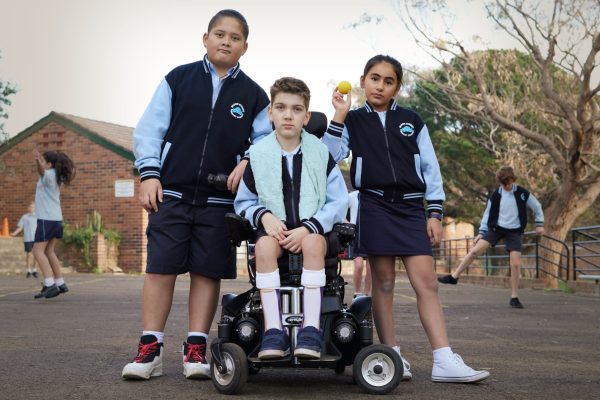
Approximately one in seven Australian children has a speech, language or communication need — a figure that encompasses an enormous range of experiences, from a child who’s taking a little longer to put sentences together, to a child using an AAC (augmentative and alternative communication) device to connect with the world in their own way.
What that statistic doesn’t capture is how varied, creative and individual communication actually is. Children communicate through words, yes — but also through gesture, expression, play, music, drawing, and technology. A child who isn’t yet speaking in full sentences may be a highly effective communicator in ways that a standard milestone chart won’t reflect.
This matters, because the starting point for any useful conversation about your child’s communication shouldn’t be “how far behind are they?” It should be “how are they communicating right now, and what do they need to thrive?”
WHY FAMILIES ACCESS SUPPORT LATER THAN THEY’D LIKE AND WHY THAT’S RARELY ABOUT AWARENESS
One of the most consistent things I hear from families when they first reach out to us is some version of: “I wish we’d done this sooner, but we just couldn’t make it happen.”
That gap between recognising a need and actually accessing support isn’t a failure of parenting. It’s a reflection of a system that, despite the dedication of the people working within it, creates real obstacles for families trying to navigate it.
Here’s what that looks like:
WAITLISTS THAT STRETCH MONTHS OR LONGER
In many parts of Australia, paediatric speech pathology waitlists extend to twelve months or more. For families in regional and remote areas, the shortage is even more pronounced. When a parent finally gets a referral and hears “the next available appointment is in eight months,” many understandably put the referral form in a drawer and tell themselves they’ll revisit it later.
THE COMPLEXITY OF FUNDING
For families accessing the NDIS, speech pathology falls under Capacity Building — Improved Daily Living supports. That sounds straightforward until you’re new to the NDIS, you’re not sure what what’s funded in what categories, and you’ve received three different pieces of advice from three different sources. Many families don’t realise they can access speech pathology through their NDIS plan, or aren’t sure if their child’s goals are worded in a way that supports it.
UNCERTAINTY ABOUT WHAT’S TYPICAL
Children develop at different rates, in different orders, across different contexts. A child who is bilingual may be putting words together in one language but not the other. A child who is autistic may have a communication profile that doesn’t match standard milestones but is making remarkable progress in their own way. When families are told “let’s just wait and see,” they often do exactly that, reasonably and responsibly.
THE WEIGHT OF EVERYTHING ELSE
Parents and carers are managing enormous loads; work, other children, their own health, financial pressure, and the administrative burden of parenting a child who may have additional needs. Researching, referencing, waiting, and advocating for speech pathology support is work that competes with everything else that has to get done. The families who access support “later than expected” are often the ones who had seventeen other things to deal with first.
WHAT EARLY CONNECTION LOOKS LIKE
There’s an important distinction worth making here: early connection to a speech pathologist doesn’t necessarily mean intensive formal therapy starting the moment a concern arises. It might mean a single conversation to help you understand your child’s communication profile. It might mean a parent coaching session where a clinician works with you, not on your child, to give you practical strategies to use in your everyday routines. It might mean getting a clear picture of whether what you’re observing is within the range of typical development or would benefit from closer support.
Early connection means having information and guidance when you need it, not being left to manage the uncertainty alone.
PRACTICAL STEPS FOR FAMILIES WHO AREN’T SURE WHERE TO START

If you’ve been thinking about your child’s communication but aren’t sure what to do next, here are some useful starting points:
Talk to your GP or paediatrician and ask specifically for a referral to a speech pathologist
Talk to your GP or paediatrician about Medicare-rebated speech pathology, there are two pathways worth knowing. From March 2026, Medicare expanded access for children and young people under 25 with stuttering, speech sound disorders, or cleft lip/palate, offering up to 8 assessment and 20 treatment sessions over a lifetime. Separately, a Chronic Disease Management (CDM) Plan provides a rebate for up to five Speech Pathology sessions per calendar year. Families can often access both. Ask directly, and be specific about your child’s diagnosis, many miss out simply because they didn’t know the right thing to ask for.
If your child has an NDIS plan, check your current funding
Speech pathology sits under Capacity Building -Improved Daily Living (Support Category 15). If you’re not sure whether your child’s goals support speech pathology, a speech pathologist can review your current plan and help you understand what’s possible. Many practices, including ours, offer this conversation at no charge.
Ask about doing sessions online
For families in regional areas, or families for whom getting to a clinic is genuinely difficult, speech pathology online isn’t a compromise, it’s a legitimate, evidence-backed option. Research consistently shows no difference in clinical outcomes between telehealth and in-person therapy. What matters most is the skill of the speech pathologist, not the medium, and the right clinician can build engagement and support a child just as effectively over a screen.
We often hear “my child won’t participate online.” The truth is, we don’t expect a child to participate consistently in every in-person session either, that’s a normal part of paediatric therapy, not a reason to rule out telehealth. What online does remove is the barrier of travel, families are often seen sooner, with far less waiting.
Look for a mobile speech pathology service
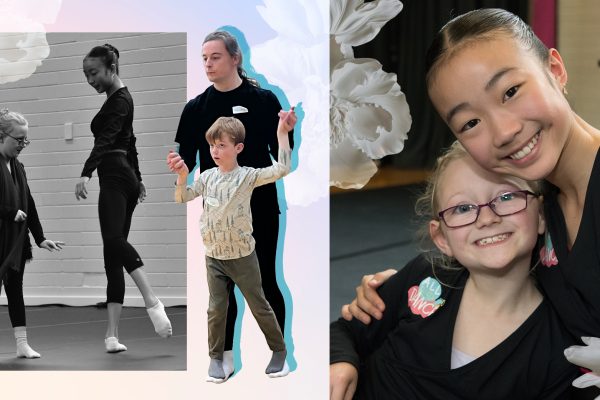
Some speech pathology practices deliver sessions in the home, at school, or in the community, and the evidence behind this is compelling. Therapy delivered in a child’s natural environment, the places they already feel comfortable, familiar and engaged, tends to generalise faster and more reliably than skills taught in a clinic room. A child practising communication at the dinner table, in the playground, or with siblings in the lounge room is learning in context, not in isolation, which means those skills are more likely to stick in real life, not just in a therapy session.
It also means families and the people who matter most, parents, carers, teachers, siblings, aren’t sitting on the sidelines. They’re part of the session, learning the same strategies in real time, which is often what turns good therapy into lasting outcomes. For children who find clinic environments unfamiliar or overwhelming, or families managing complex logistics, this approach isn’t just more convenient. It’s often more effective.
You don’t need a diagnosis to access a speech pathology assessment
A GP or paediatrician referral is helpful but not always required. A speech pathologist can assess your child, give you a clear picture of their communication profile, and work with you on next steps, regardless of whether there’s a formal diagnosis in place.
WHAT GENUINELY HELPS
The families I see making the most progress aren’t necessarily the ones who started earliest. They’re the ones who feel informed, supported, and part of the process. They’re the ones who understand what their child is communicating, and what their child needs to communicate more freely and who have practical strategies to support that in daily life.
Communication development happens everywhere: at the dinner table, in the car, during bath time, at school pickup. The role of a good speech pathologist isn’t just to work with a child in a room once a week. It’s to help you understand your child’s communication deeply, and to give you the confidence and tools to support it in all the moments that make up your family’s day.
If you’ve been sitting with a question about your child’s communication, it’s worth asking it. You might not find anything’s wrong – but having good information is always better than sitting with uncertainty on your own.
ABOUT THE AUTHOR
Gabriella Ptasznik is the Founder and CEO of GRP Speech Pathology, a registered NDIS provider delivering specialist speech pathology to children, adults, and families across Australia — in the home, at school, and via telehealth. GRP Speech Pathology supports more than 2,000 NDIS participants annually and has delivered over 100,000 sessions since its founding in 2017.
Reach out and follow on socials:
au.linkedin.com/in/gabriellaptasznik | facebook.com/grpspeechpathology| instagram.com/grp.speechpathology | tiktok.com/@grpspeechpathology