Hard days don’t mean something’s wrong with us – Christine’s story
The Source Q&A: stories from families living with disability.
Tell us about your family – where do you live and who’s in your household?
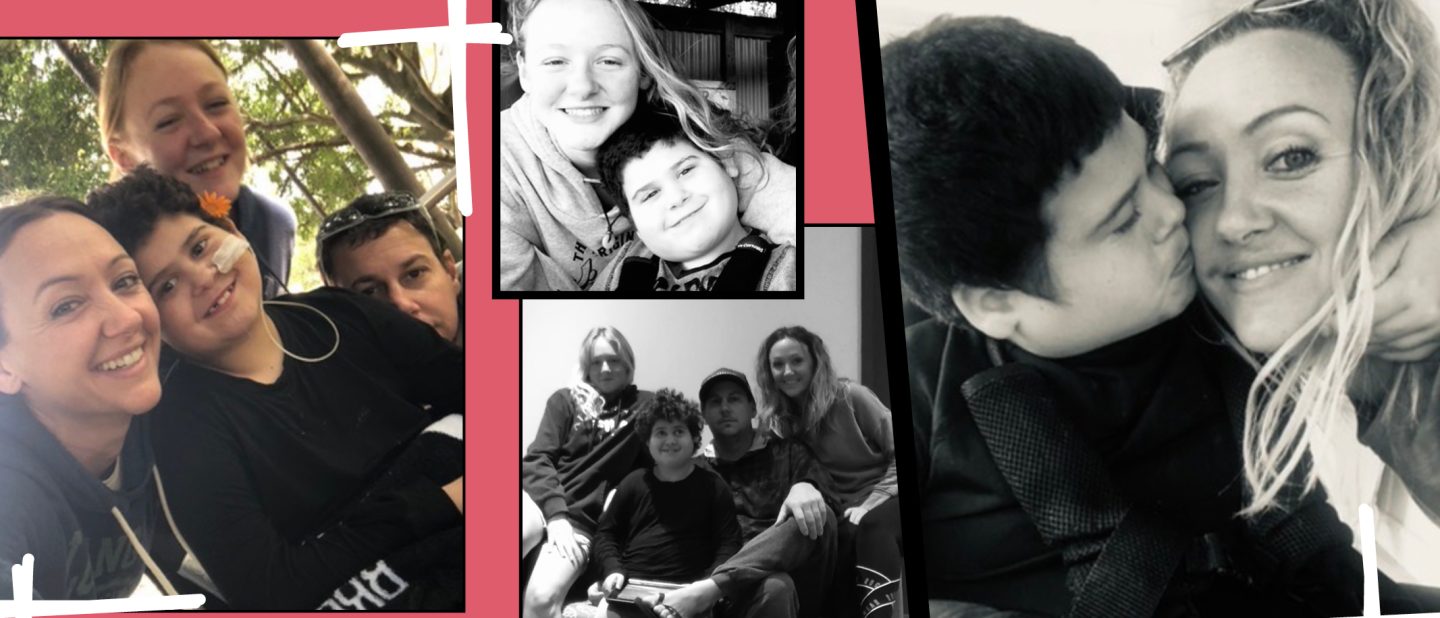
We live in Brisbane, Australia. Our family is made up of my husband and me, our two children, and our dog. Life in our home is full, unpredictable and often looks a little different to what people might expect.
Our youngest son has complex disabilities and high support needs, so much of our family life revolves around appointments, therapies, advocacy and finding creative ways to help him feel safe and connected. Alongside all of that, we’re also just a family who loves being together outdoors, finding joy in the ordinary, and making the most of the moments that come
a little easier.
What’s your child’s diagnosis and how does it affect their daily life?
Our youngest son has multiple complex disabilities, including autism, ADHD, microcephaly, bilateral hearing loss and a rare genetic condition, along with several other medical diagnoses. He is non- speaking and has high support needs.
His disabilities affect almost every part of daily life. Communication, sensory processing, uncertainty, pain, medical procedures and changes to routine can all be incredibly challenging. He needs support with most everyday activities, and our family life often revolves around balancing his medical care with creating an environment where he feels safe, understood and able to participate in the world in his own way. Like every child, though, he is far more than his diagnoses. He’s curious, funny, determined and constantly teaching us to slow down, pay attention and see the world from a different perspective.
What led to his diagnosis?
We knew from very early on that our son was developing differently. He missed milestones, faced significant challenges with communication, and his medical needs became increasingly complex. Over the years, we met with countless specialists, underwent extensive testing, and slowly pieced together the puzzle.
Rather than one moment or one diagnosis, it was a long journey of observation, assessment and persistence. Some answers brought clarity, while others raised new questions. Like many families of children with complex disabilities, our experience wasn’t a straight path, it was a gradual process of understanding who our son is and learning how best to support him.
How do you handle the juggle of appointments, therapy, school and everything else?
We’ve learned that there isn’t really a perfect system for juggling everything – there’s just constant recalibration.
We plan ahead as much as we can, but we also build in flexibility because so much of our life is shaped by how our son is coping on any given day. Appointments and therapy get prioritised when they need to, but we’re also careful not to let the schedule completely take over the child in front of us.
A big part of it is communication between us as parents – checking in, adjusting, sharing the load where we can. We also rely heavily on organisation, reminders, and sometimes just accepting that things will overlap or not go to plan.
Over time, I’ve had to let go of the idea of “keeping on top of everything” and shift into something more realistic: staying responsive, staying present, and making decisions in the moment that protect our child’s wellbeing and our family’s capacity to keep going.
What do you wish you could say to the parents at school/playgroup/in the community who may be uncomfortable around your child?
I think I’d start by saying I understand the discomfort. When you don’t know a child’s story, or you’re met with behaviour that looks confusing or intense, it can be hard to know what to do or how to respond. What I wish people understood is that
my child isn’t trying to be difficult or disruptive. He’s communicating the only way he can in moments where things
feel overwhelming, unsafe, or out of his control. There’s usually a need underneath what you’re seeing, often around regulation, communication, or sensory overload.
What helps most is not judgement or distance, but calm, simple humanity. A bit of patience. A bit of space. Sometimes just acknowledging him as a child who belongs, even if he’s struggling in that moment, changes everything.
And for us as parents, what matters most is not perfection from others – it’s safety, inclusion, and the reassurance that our child is still welcome in the room, even on the hard days.
What part of your life as a carer do people on the outside just not see or understand?
I think what’s hardest to explain is the invisible load that sits underneath everything. People often see appointments, behaviours, or the more intense moments, but they don’t see the constant scanning, planning, anticipating and adjusting that runs in the background all day.
There’s a kind of forever alertness that doesn’t switch off. You’re always reading signals, trying to stay one step ahead of what might happen next, while also holding the emotional weight of not knowing what the day will bring. Even on “quiet” days, your nervous system doesn’t always get the message that it’s safe to relax.
Another part people don’t often see is the decision fatigue. Everything requires a judgement call – what’s a behaviour, what’s pain, what’s sensory overload, what needs action right now versus what can wait. It’s constant micro-decision-making that adds up in ways that are hard to describe unless you’ve lived it.

And then there’s the emotional layer that sits underneath it all – the love, the grief, the fierce advocacy, the exhaustion, and the deep commitment to just keep showing up again tomorrow.
What does “looking after yourself” actually mean in your world?
Looking after yourself in our world has had to be redefined completely. It isn’t about routines or self-care in the traditional sense, it’s about survival, sustainability, and finding small pockets of restoration inside a very full life.
Some days it looks like making sure I eat something before mid-afternoon or sitting in the car for five minutes of quiet between appointments. Other days it’s tagging in with my husband so I can step outside, breathe, or just not be needed for a moment. And sometimes it’s simply getting through the day without everything falling apart and recognising that as enough.
I’ve also had to learn that self-care isn’t separate from caregiving in our home – it’s woven into it. It’s how regulated I am when things are hard, how supported I feel in partnership, and how quickly I can reset so I can stay emotionally available for my child.
On the days when it feels too hard, what keeps you getting up and doing it all again?
I don’t think it’s one big motivating thought that gets me through. It’s smaller than that. It’s routine. It’s responsibility. It’s this love that doesn’t really give you the option to opt out.
Some days I’m running on very little – sleep, patience, capacity – and I’m just doing the next practical thing in front of me. Get him settled. Get through the appointment. Make the next decision. Then the next one.
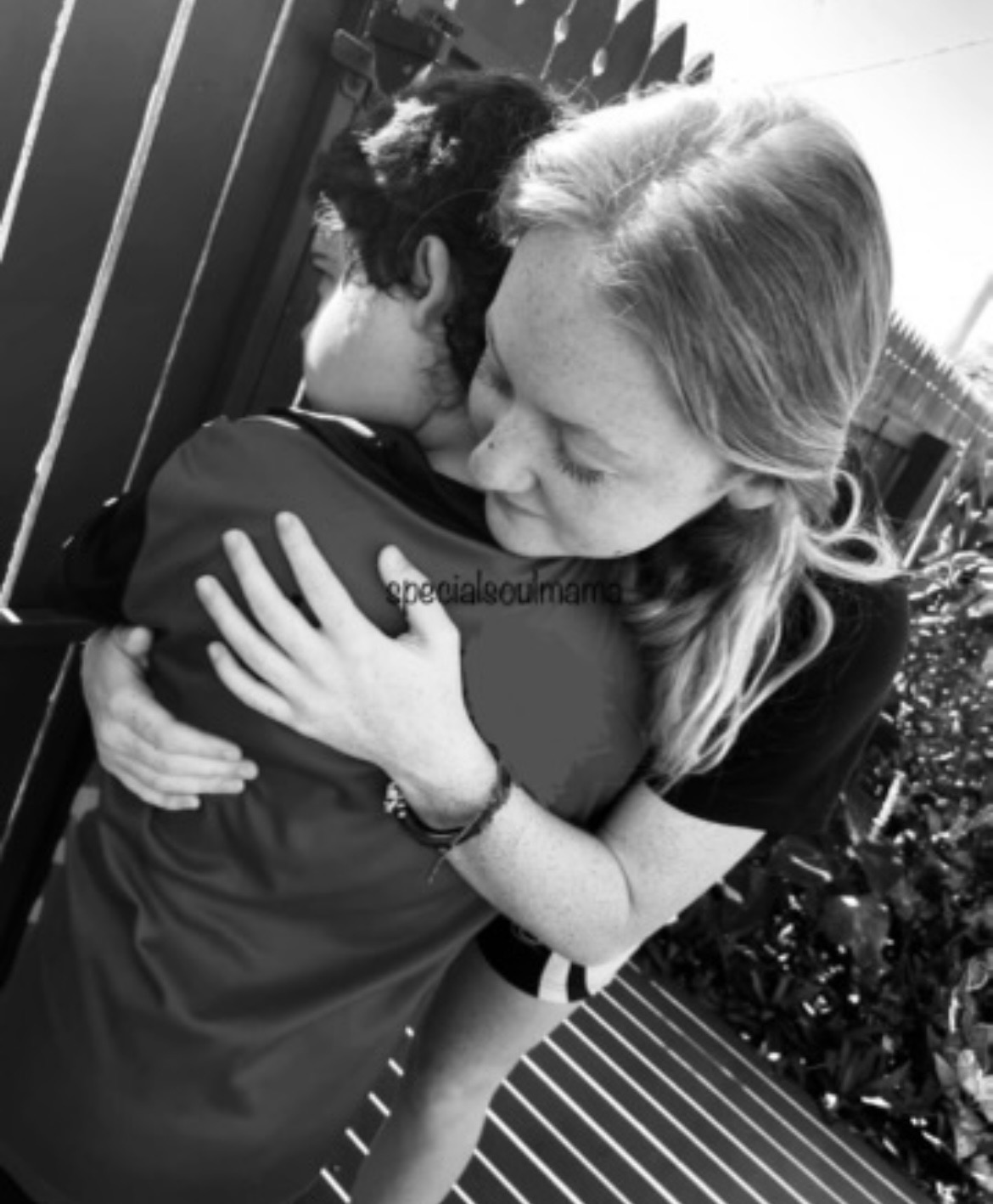
What pulls me back into it, even on the hardest days, is him. Not in a sentimental way, but in a very real one. He still needs me to show up, even when I feel like I’ve got nothing left in the tank. And I know that staying steady for him matters more than how I feel in that moment.
There’s also something grounding about knowing that hard days don’t mean something is wrong with us – they’re just part of the reality of caring for someone with complex needs. So I keep going, not because it feels easy or inspiring, but because it’s what love in action actually looks like most days.
Is there something that has made you really proud lately?
Lately, I’ve been really proud of the way our son has navigated an incredibly difficult few weeks. He recently broke his foot, and for a child who is non-speaking, has significant sensory needs and finds medical environments overwhelming, that has been a huge challenge. He’s shown so much resilience through hospital visits, scans, appointments and the disruption to his routine.
I’m also proud of our family. We’ve learned that strength isn’t about handling everything perfectly – it’s about adapting, supporting one another and continuing to find moments of connection, even when life feels heavy.
Those moments might not look extraordinary from the outside, but they’re the ones that remind me how much growth can happen in the middle of really hard seasons.
What’s one small change you’d love to see that would make life easier for families like yours?
I’d love to see a little more understanding, and a little less judgement.
So much of what families like ours need doesn’t require specialist knowledge – it just requires people to be curious instead of critical. To recognise that behaviour is communication, that disability isn’t always visible, and that every family is carrying a story you may know nothing about.
Small acts of inclusion make a huge difference. A teacher who takes the time to understand a child’s needs. A business that creates a more accessible environment. Another parent who chooses kindness instead of assumptions. A stranger who offers patience instead of a stare.
Those things might seem small on their own, but together they create communities where children with disabilities – and their families – feel like they truly belong.